What Does a Chimney Inspection Include?
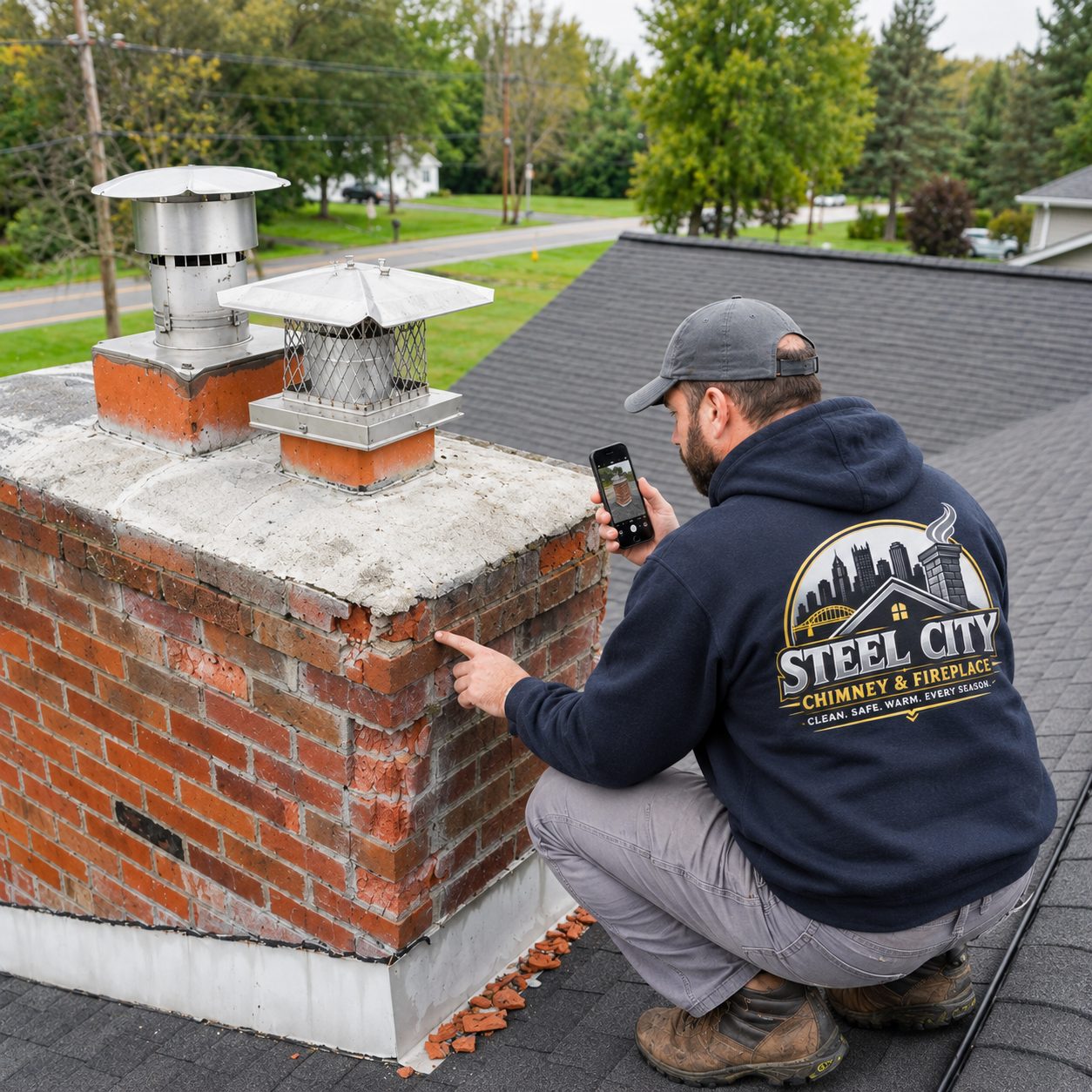
A chimney inspection sounds simple in concept — check the chimney, make sure it's okay — but a thorough one actually covers several distinct parts of the system, each of which can develop its own separate issues. Here's what a complete inspection typically looks at, and why each part matters.
The exterior: crown, cap, and flashing
Starting at the top, the crown is checked for cracking and proper slope, since this is one of the most common sources of water intrusion. The cap is checked for damaged mesh, rust, or a poor fit that could let in animals or debris. The flashing where the chimney meets the roofline is examined for gaps or corrosion, since this joint is a frequent leak source.
The masonry structure
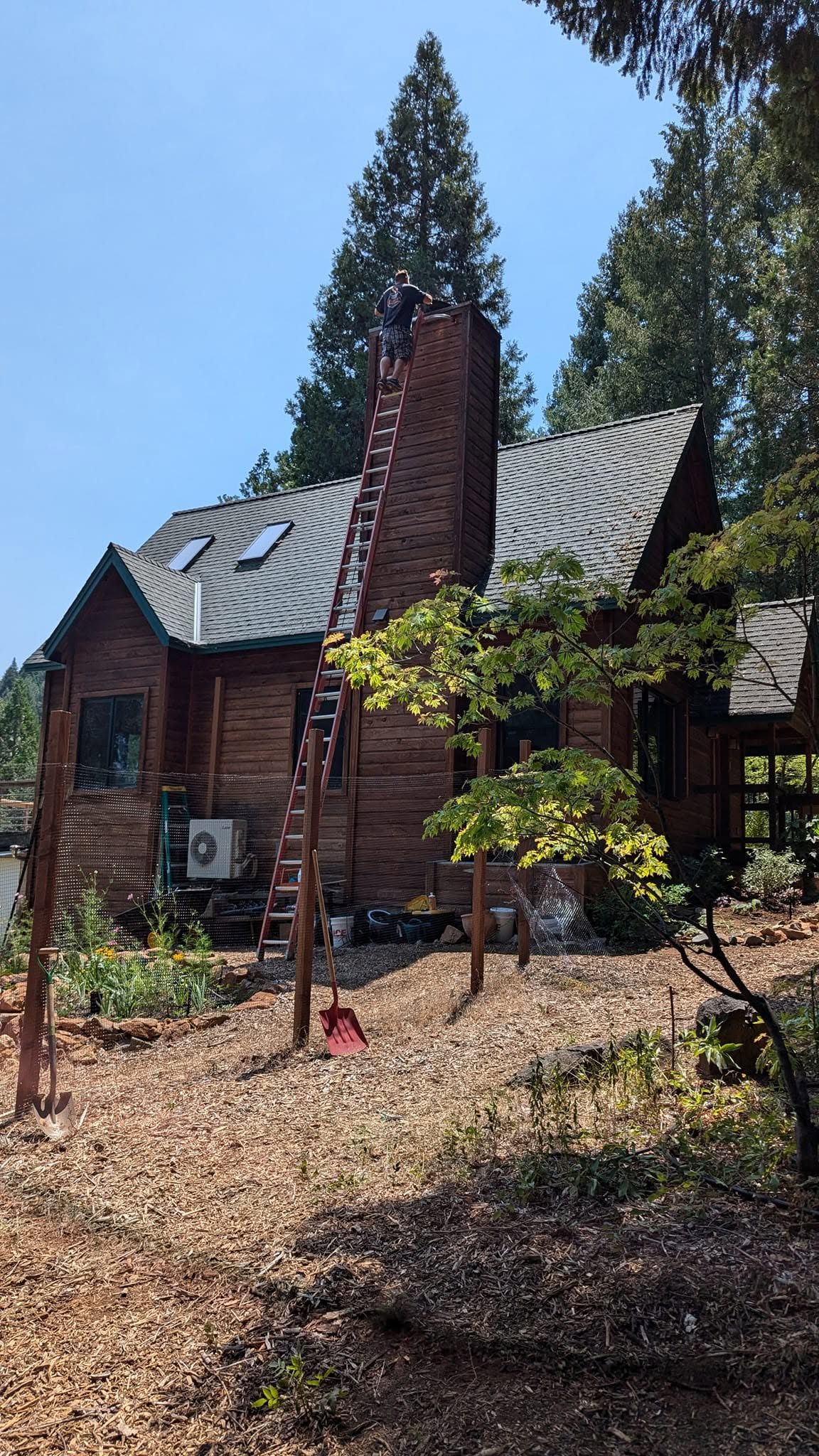
Visible brick and mortar are checked for cracking, spalling, and general condition. On older homes, this step often reveals the cumulative effect of decades of freeze-thaw cycling, even when the chimney looks fine from a distance.
The flue liner
This is the part of the system that isn't visible without a direct look, which is why a proper inspection includes checking the liner's condition along its length — sometimes with a flashlight, and for a more thorough look, a video inspection camera. Clay tile liners are checked for cracking or gaps between sections; metal liners are checked for corrosion or damage.
The smoke chamber and firebox
The area directly above the firebox is checked for proper parging (a smooth mortar finish) and any cracks or gaps. The firebox itself is examined for cracked firebrick or deteriorated mortar joints, since damage here sits closest to combustible framing.
The damper
A working inspection includes testing the damper's full range of motion, checking that it opens, closes, and seals properly.
What you get at the end
A good inspection ends with clear documentation — photos where relevant, and a plain-language explanation of what was found, what (if anything) needs attention, and how urgent each item actually is. You shouldn't be left guessing what a technical finding actually means for your fireplace.
Ready to get your chimney checked out?
Request a free estimate online or give us a call — we'll get back to you quickly.