Signs Your Chimney Needs Repair
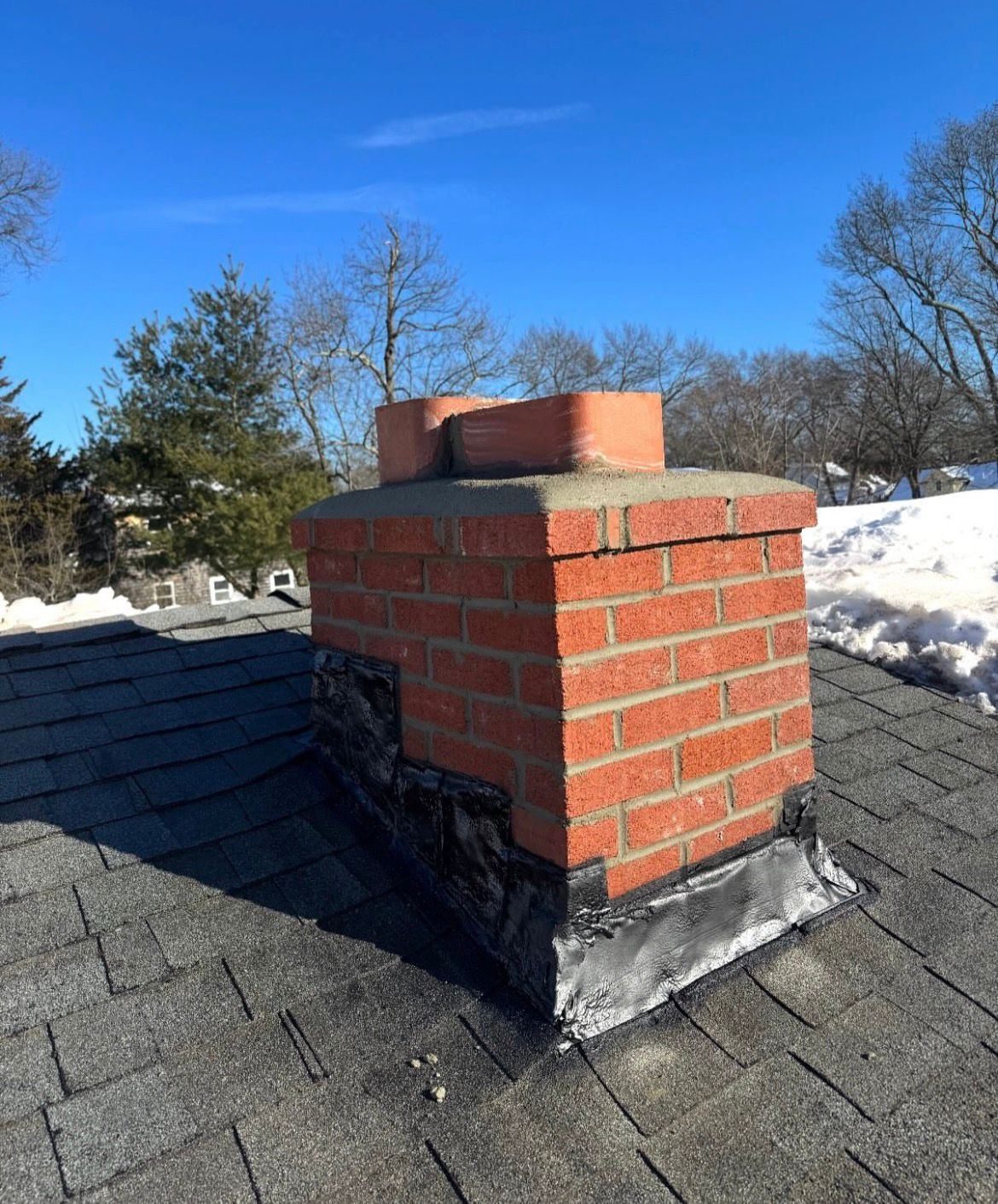
Chimneys don't usually fail suddenly. In most cases, there are visible signs well before a small issue turns into a significant repair, if you know what to look for. Here are the ones we see most often on Pittsburgh-area homes.
White staining on the brick (efflorescence)
That chalky white residue you sometimes see on brick chimneys is called efflorescence, and it's caused by water moving through the masonry and depositing minerals as it evaporates at the surface. It's a sign that the chimney is absorbing more water than it should, even if there's no visible cracking yet.
Cracked or missing mortar
Mortar is designed to wear over time, but crumbling or missing joints let water directly into the wall assembly, where it can freeze and expand through a Pennsylvania winter. This is one of the more common repairs we perform, and one of the more cost-effective ones to address early.
Water stains on the ceiling or wall near the chimney
This is usually the first sign homeowners actually notice, and it can point to a few different causes — a cracked crown, failed flashing, or a missing cap. An inspection is the most reliable way to trace the water back to its actual source.
A damaged or missing cap
If you can see daylight looking up the flue, or you've noticed animal activity around the chimney, there's likely no cap in place or the existing one has failed.

A leaning or visibly shifting structure
This is the sign that warrants the fastest response. A chimney that appears to be leaning or separating from the house structure should be evaluated promptly rather than monitored.
Smoke or odor changes
If your fireplace suddenly smokes more than it used to, or you notice a persistent odor even when it's not in use, something in the system has likely changed — worth having checked before you assume it will resolve on its own.
None of these signs on their own necessarily means an expensive repair. But catching any of them early, rather than waiting for the problem to become more visible or more serious, is almost always the more cost-effective path.
Ready to get your chimney checked out?
Request a free estimate online or give us a call — we'll get back to you quickly.