
Chimney Liner Installation in Pittsburgh, PA
A correctly sized liner protects the masonry around it and keeps combustion byproducts venting where they belong.
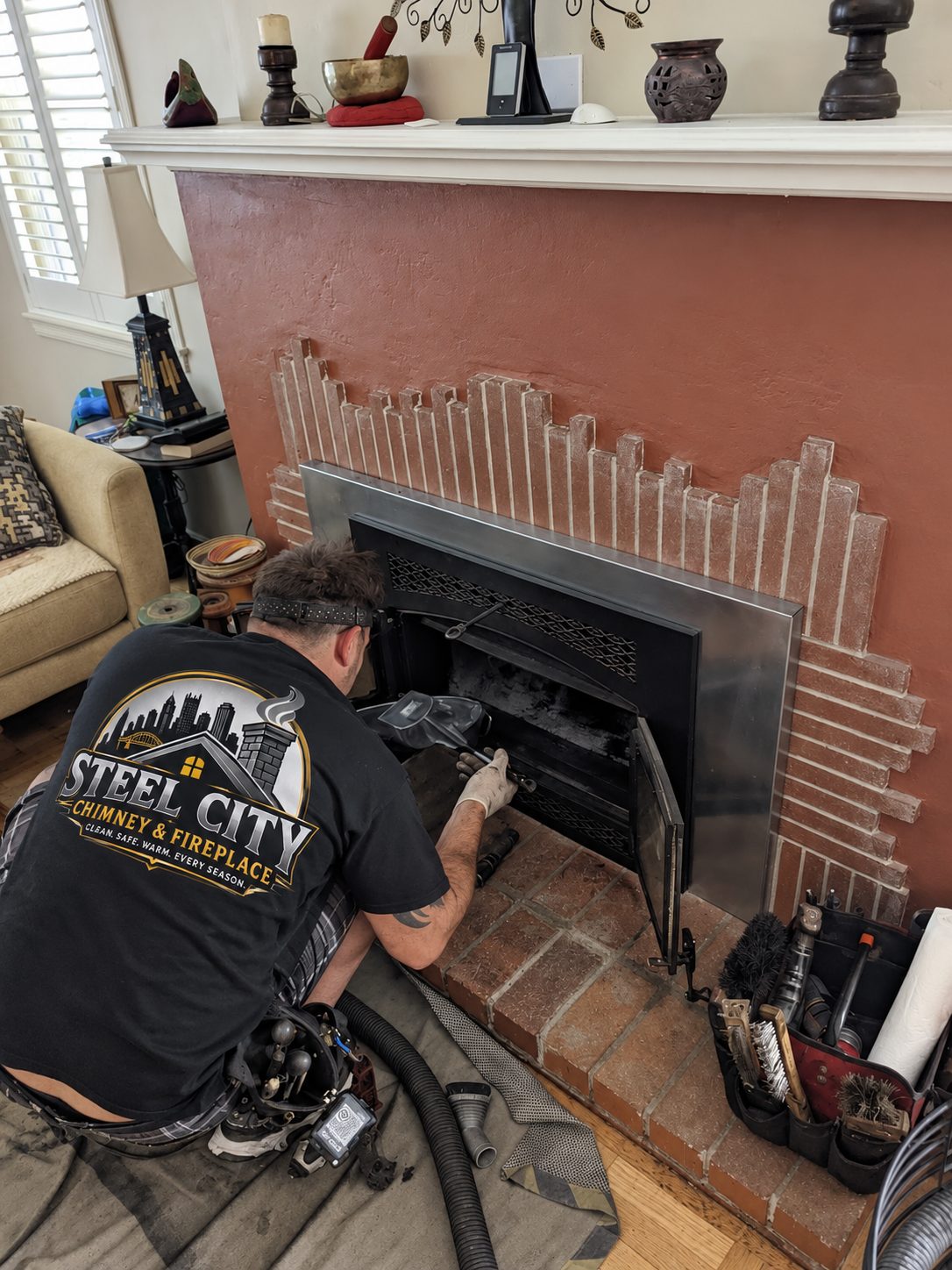
The flue liner is the passage inside the chimney that carries smoke, gas, and combustion byproducts safely out of the home while protecting the surrounding masonry from heat and corrosive residue. Many older Pittsburgh-area chimneys were built with clay tile liners, which work well but can crack over time from heat stress, settling, or age. Others may have no liner at all, which isn't considered safe by modern standards for most appliances.
Liner installation and replacement means fitting the flue with a liner sized and rated for whatever appliance is connected to it — typically a stainless steel liner for most repair and replacement work, or reconstructed clay tile in specific masonry restoration cases. Getting the diameter right matters: a liner that's too large or too small hurts draft performance and can affect the appliance's safety and efficiency.
Common Chimney Liner Installation Problems We Address
- No liner present in an older chimney
- Cracked or deteriorated clay tile liner sections
- A liner that's the wrong size for the connected appliance
- Converting an appliance and needing a liner rated for the new fuel type
Signs You May Need Chimney Liner Installation
Even small gaps in a clay liner can let heat and combustion byproducts reach the surrounding masonry.
New appliances often require a liner sized specifically for that unit's output.
This is one of the most common outcomes of a thorough inspection on an older chimney.
Our Process
- Measure and size. We determine the correct liner diameter and material based on the connected appliance and flue dimensions.
- Remove damaged sections if needed. Deteriorated liner material is cleared before the new liner is installed.
- Install the liner. The new liner is run the full length of the flue and properly connected at the appliance and chimney cap ends.
- Insulate and seal. Depending on the application, the liner is insulated for performance and sealed at connection points.
- Test draft performance. We confirm the appliance vents properly through the new liner before finishing the job.
A Pittsburgh Consideration
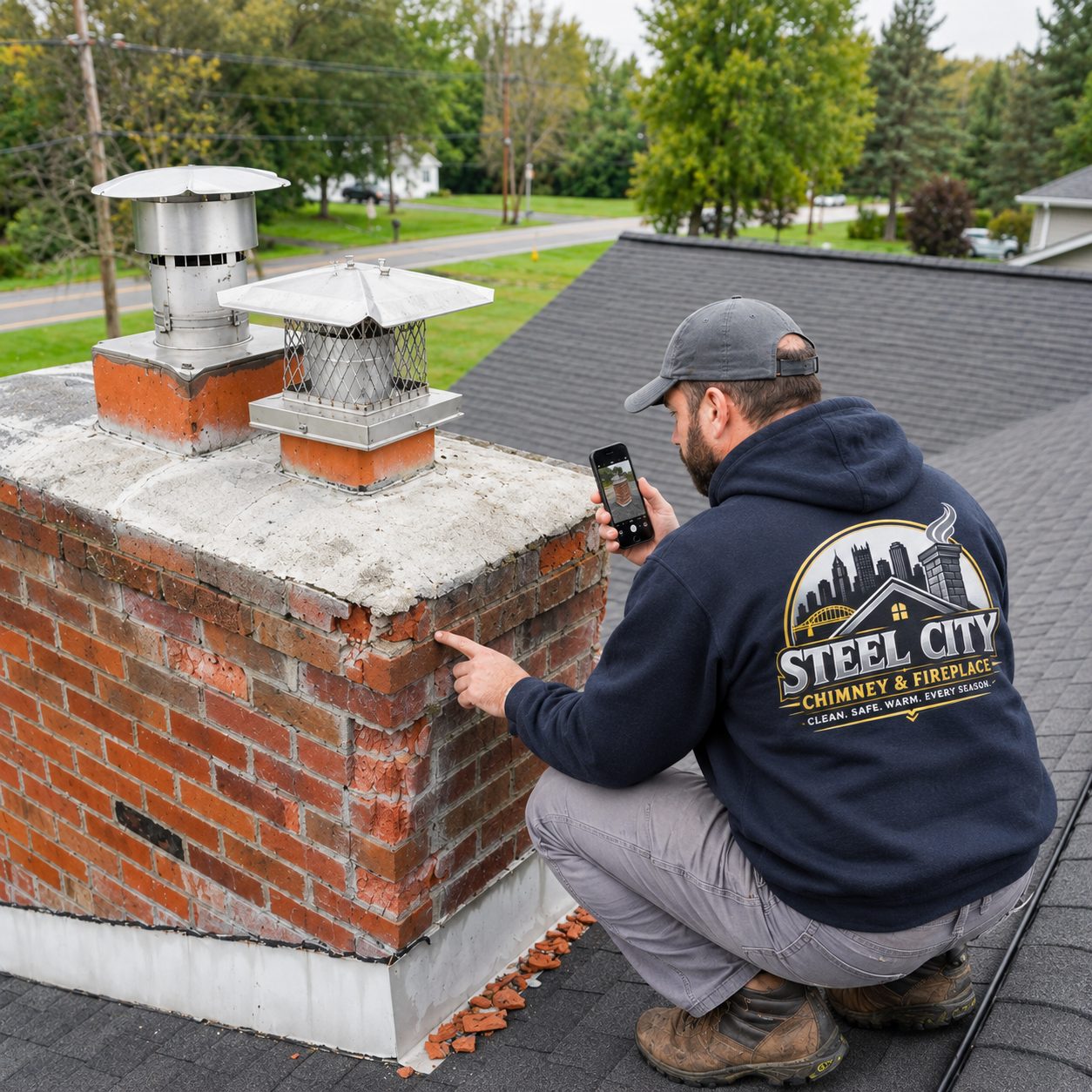
A lot of the housing stock around Pittsburgh predates modern liner standards, so an unlined or clay-lined chimney isn't unusual to find during an inspection. Correcting that with a properly sized stainless liner is one of the most impactful safety upgrades we perform on older homes in the area.
Benefits of Chimney Liner Installation
- Protects surrounding masonry from heat and corrosive byproducts
- Improves draft performance when sized correctly
- Brings an older, unlined chimney up to a modern safety standard
- Matches the liner to the specific appliance connected to it
Frequently Asked Questions
Signs of a damaged liner include visible cracking during inspection, staining on nearby walls or ceilings, or a chimney with no liner at all found during a home inspection.
Stainless steel is the most common choice for relining projects because it's durable and works across a range of appliance types. The specific gauge and insulation depend on the appliance being vented.
A properly sized liner can improve draft, reduce smoke backup, and make the fireplace or stove burn more efficiently.
Need Chimney Liner Installation in the Pittsburgh Area?
Request a free estimate online or call us directly — we will follow up quickly to schedule a visit.