
White Stains on Your Chimney? What Efflorescence May Be Telling You

What Efflorescence Is
Efflorescence is the chalky white or grayish residue that sometimes appears on brick surfaces, formed when water dissolves mineral salts inside the masonry and carries them to the surface as it evaporates, leaving the minerals behind.
Why the Stain Is a Moisture Clue
The stain itself isn't damaging, but its presence confirms that water is actively moving through the masonry — which is the part that matters. No moisture movement means no efflorescence, so seeing it is a reliable sign that the brick is absorbing more water than it ideally should.
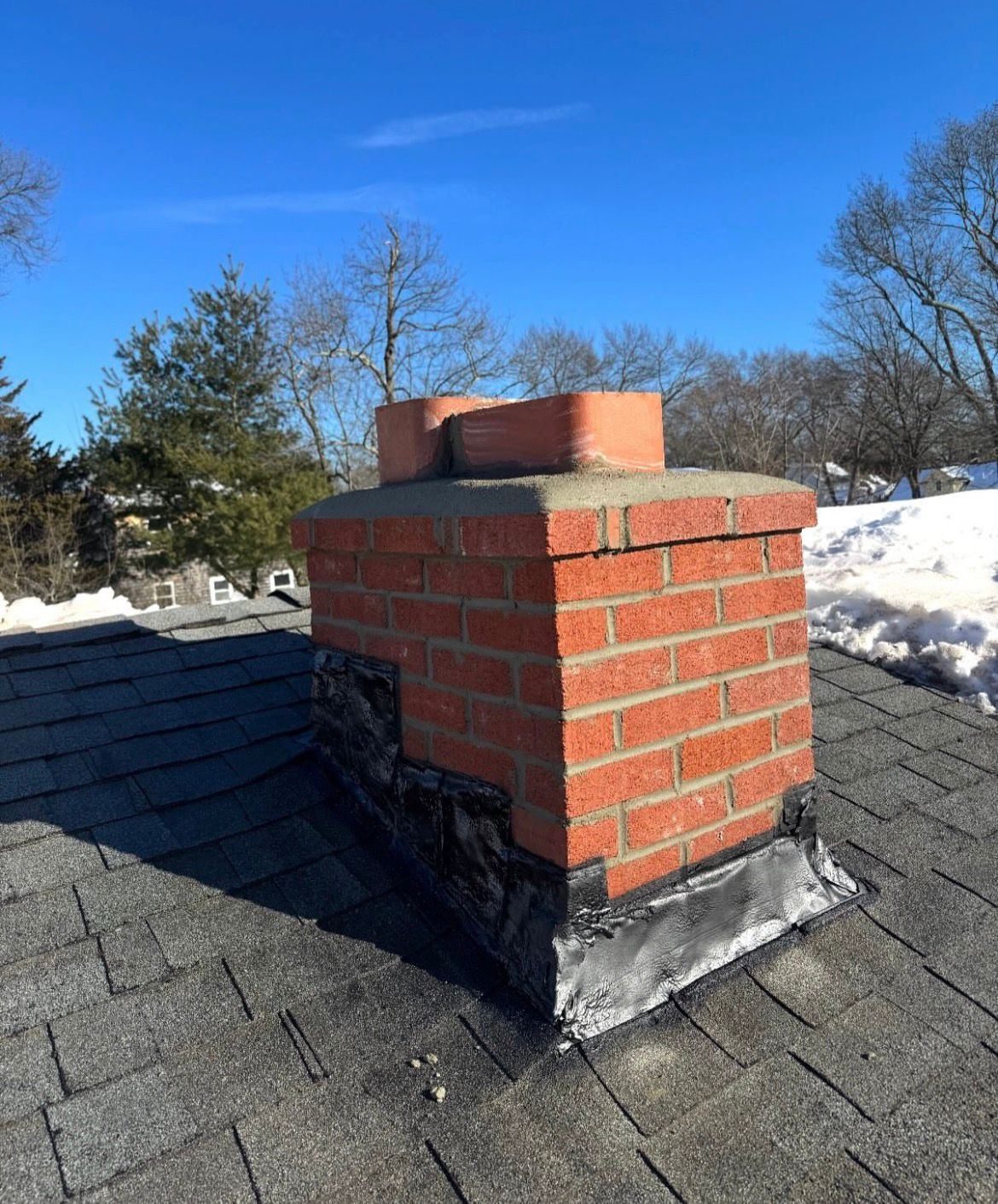
Common Places Water Can Enter
- A cracked or poorly sealed crown at the top of the chimney
- Missing or deteriorated flashing at the roofline
- Porous, unsealed masonry absorbing rain directly
- A missing or damaged cap allowing direct water entry into the flue
Why Cleaning the Stain Does Not Solve the Cause
Efflorescence can be washed off relatively easily, but doing so without addressing the water source just means it will likely reappear after the next significant rain. Treating the stain instead of the moisture path is a common, understandable mistake.
When White Staining Deserves a Closer Look
Occasional light efflorescence on new masonry isn't unusual and often fades over time as excess construction moisture works its way out. Persistent or recurring staining on an established chimney is a different story and worth a proper moisture-focused evaluation.
What a Moisture-Focused Evaluation Should Consider
A useful evaluation checks the crown, cap, and flashing together with the masonry itself, since efflorescence alone doesn't indicate which specific entry point is responsible. Identifying the actual path is what allows the right repair to be recommended instead of a guess.
Ready to get your chimney checked out?
Request a free estimate online or give us a call — we'll get back to you quickly.