
The Pittsburgh Homeowner's Complete Guide to Chimney Maintenance

Chimney maintenance can sound like one task, but it's really a handful of different checks that happen to live on the same structure. The masonry, the flue liner, the crown, the flashing, and the cap all age differently and fail for different reasons, which is why a maintenance plan built around "the chimney" as a single object tends to miss things.
Why Pittsburgh Chimneys Need Regular Attention
A chimney sits fully exposed to weather above the roofline while managing heat and combustion byproducts on the inside. That combination of exposure and function is unusual for a home component, and it's part of why two chimneys that look similar from the street can be in very different condition once you actually look closely.
A Simple Chimney Maintenance Schedule
A reasonable baseline for most wood-burning systems is an annual inspection and a cleaning scheduled based on actual creosote buildup rather than a fixed calendar date. Gas systems don't need the same creosote-driven cleaning, but the venting still benefits from a periodic check. The right frequency ultimately depends on how the fireplace is used, not a one-size rule.
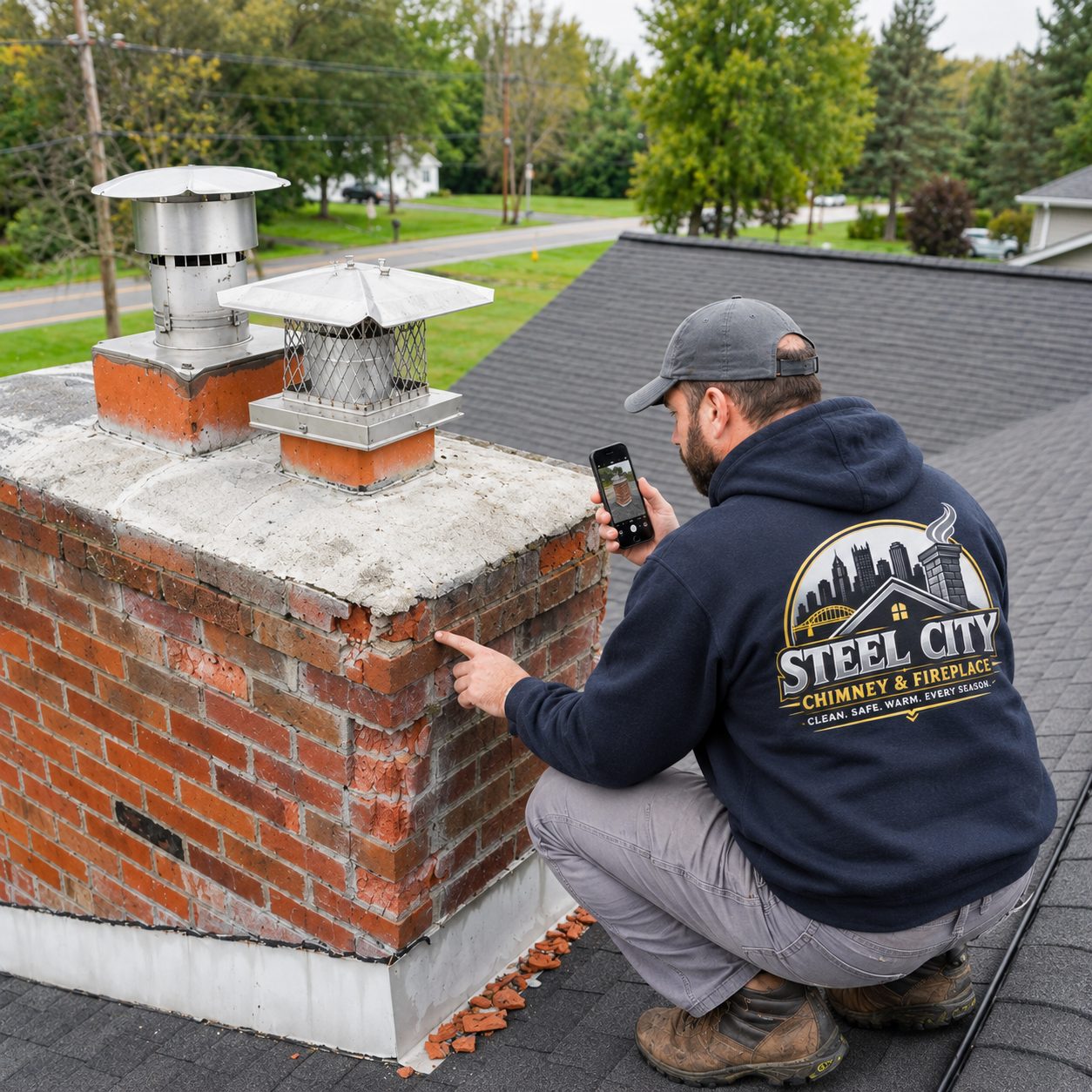
Exterior Masonry: What to Watch From the Ground
You can catch a fair amount from ground level without climbing anything: white chalky staining on the brick, chunks of mortar or brick debris near the base, a visibly tilted or damaged cap, or a crown that looks cracked or uneven from a distance with binoculars. None of these confirm a diagnosis on their own, but they're useful things to note before a service visit.
Water Is Often the Bigger Enemy
More chimney damage in this region traces back to water than to heat. Brick and mortar are porous, and once water gets in — through a cracked crown, failed flashing, or a missing cap — freeze-thaw cycling through the winter does the rest of the damage gradually, from the inside out.
Cleaning, Creosote and Fireplace Use
How much creosote builds up in a season depends heavily on burn frequency and wood quality, not just the calendar. A fireplace used most weekends through the winter with well-seasoned hardwood will accumulate creosote differently than one used occasionally with whatever wood is on hand — which is exactly why an inspection, not a guess, should decide when to clean.
When an Inspection Matters
Beyond the annual baseline, a fresh inspection makes sense any time something changes — new staining, a different smell, more smoke than usual, or simply moving into a home where the chimney's history is unknown. An inspection is also the right first step before assuming any single repair is needed.
A Pittsburgh-Specific Seasonal Checklist
- Before the heating season: schedule cleaning and inspection if it's been a year
- After a hard winter: check for new cracks, spalling brick, or crown damage once the snow clears
- After heavy rain: watch for any new water staining near the firebox or chimney chase
- Any time something changes: new smoke, smell, sound, or draft behavior is worth a look
Ready to get your chimney checked out?
Request a free estimate online or give us a call — we'll get back to you quickly.