
Chimney Flashing vs. Chimney Crown: Which One Is Causing the Leak?
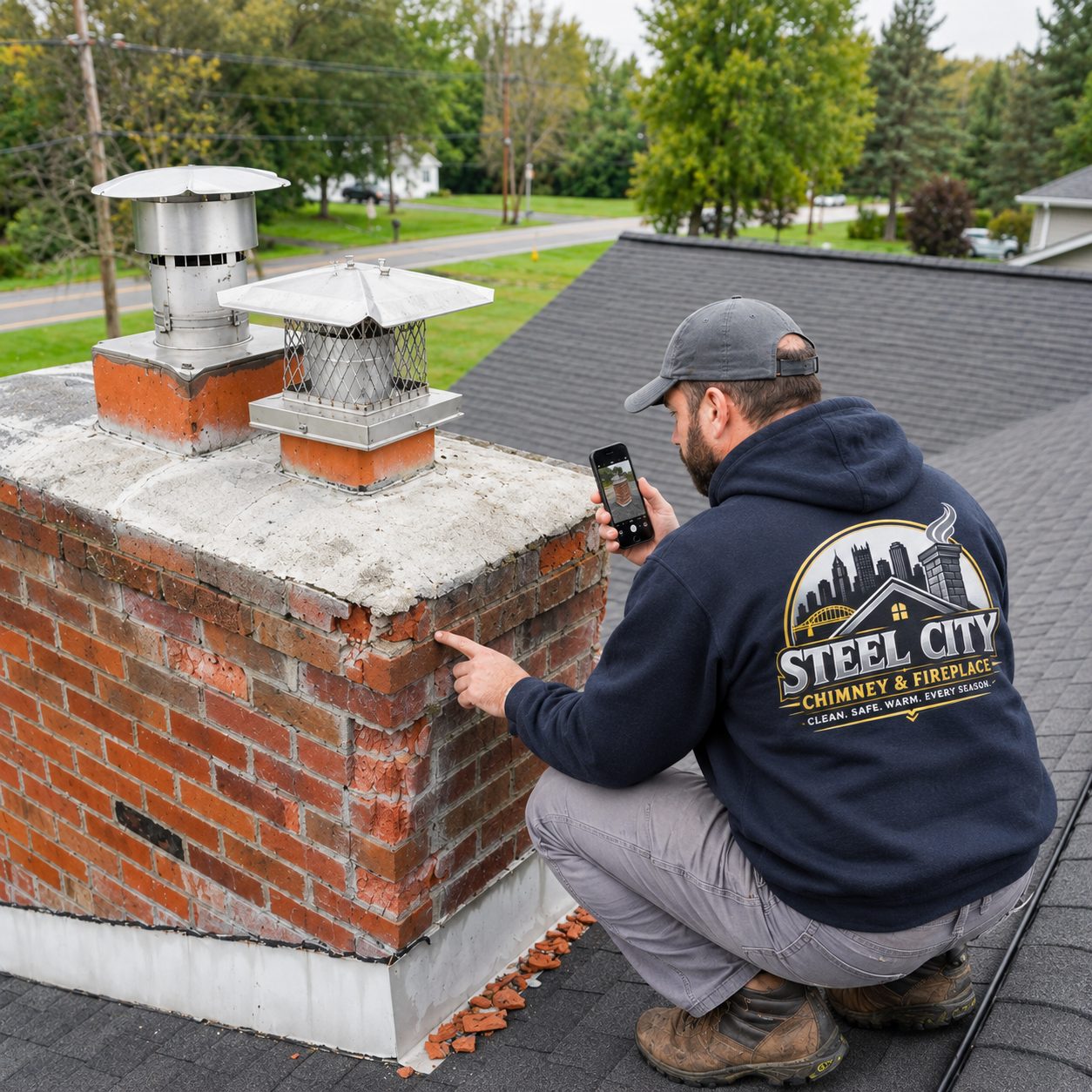
Two Different Parts With One Shared Job: Managing Water
Flashing and the crown both exist to keep water out of the chimney system, but they sit in different places and fail in different ways. Confusing the two — or assuming a repair to one will fix a problem caused by the other — is a common and avoidable mistake.
What the Chimney Crown Does
The crown is the concrete or mortar cap covering the very top of the chimney's masonry, sloped to shed water away from the flue opening. It sits above the roofline entirely, exposed on all sides to sun, rain, and snow.
What Chimney Flashing Does
Flashing is the metal material sealing the joint where the chimney passes through the roof itself, lower down than the crown. Its job is to keep water from working its way in at that specific transition between two different building materials.
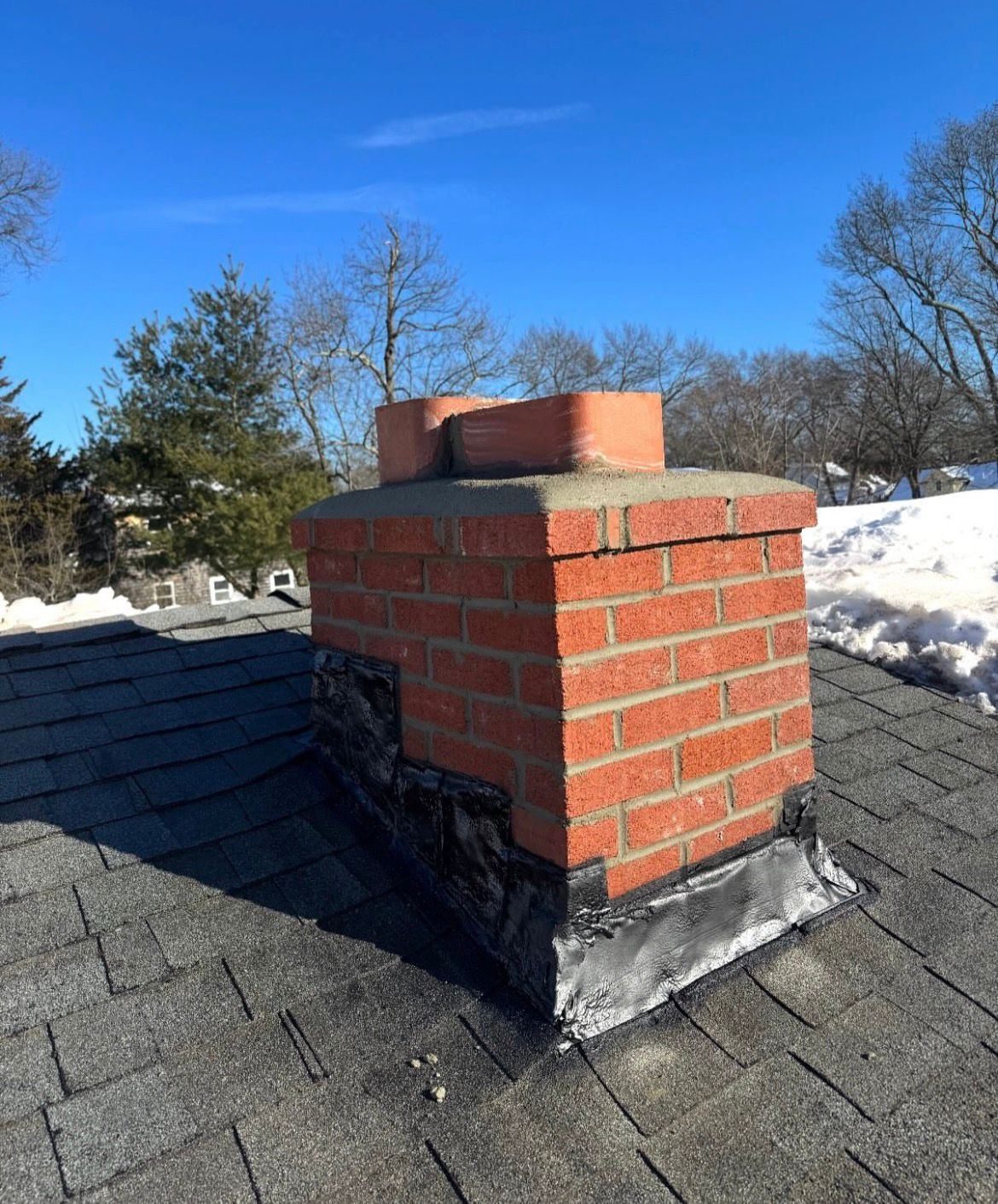
Clues That Point Toward the Crown
- Water appears directly in the firebox, especially during or right after rain
- Visible cracks or unevenness across the top of the chimney when viewed from a ladder or drone
- Staining that seems to originate from inside the flue itself
Clues That Point Toward Flashing
- Staining on a ceiling or wall near where the chimney passes through the roofline
- Water damage that seems concentrated at the roof-to-chimney intersection specifically
- A leak that started or worsened after recent roofing work
Why You Should Avoid Diagnosing From One Stain Alone
Water can travel some distance from its actual entry point before it becomes visible, following framing or sheathing before showing up as a stain. That's why a stain's location is a helpful clue but not a substitute for a direct inspection that traces the path back to its source.
Ready to get your chimney checked out?
Request a free estimate online or give us a call — we'll get back to you quickly.