Chimney Cleaning vs. Chimney Inspection: What's the Difference?

Cleaning and Inspection Solve Different Questions
Cleaning answers "how much creosote and debris has built up, and is it removed?" Inspection answers "what condition is the chimney system actually in?" They're often scheduled together, which is part of why people assume they're the same service — but a chimney can need one without needing the other.
What Chimney Cleaning Is Designed to Do
Cleaning physically removes creosote, soot, and debris from the flue, smoke chamber, and firebox using brushes and HEPA-filtered vacuum equipment. It restores draft and reduces fire risk, but it doesn't evaluate whether the crown is cracked or the liner is sound — that's not what the process is built to check.
What a Chimney Inspection Is Designed to Do
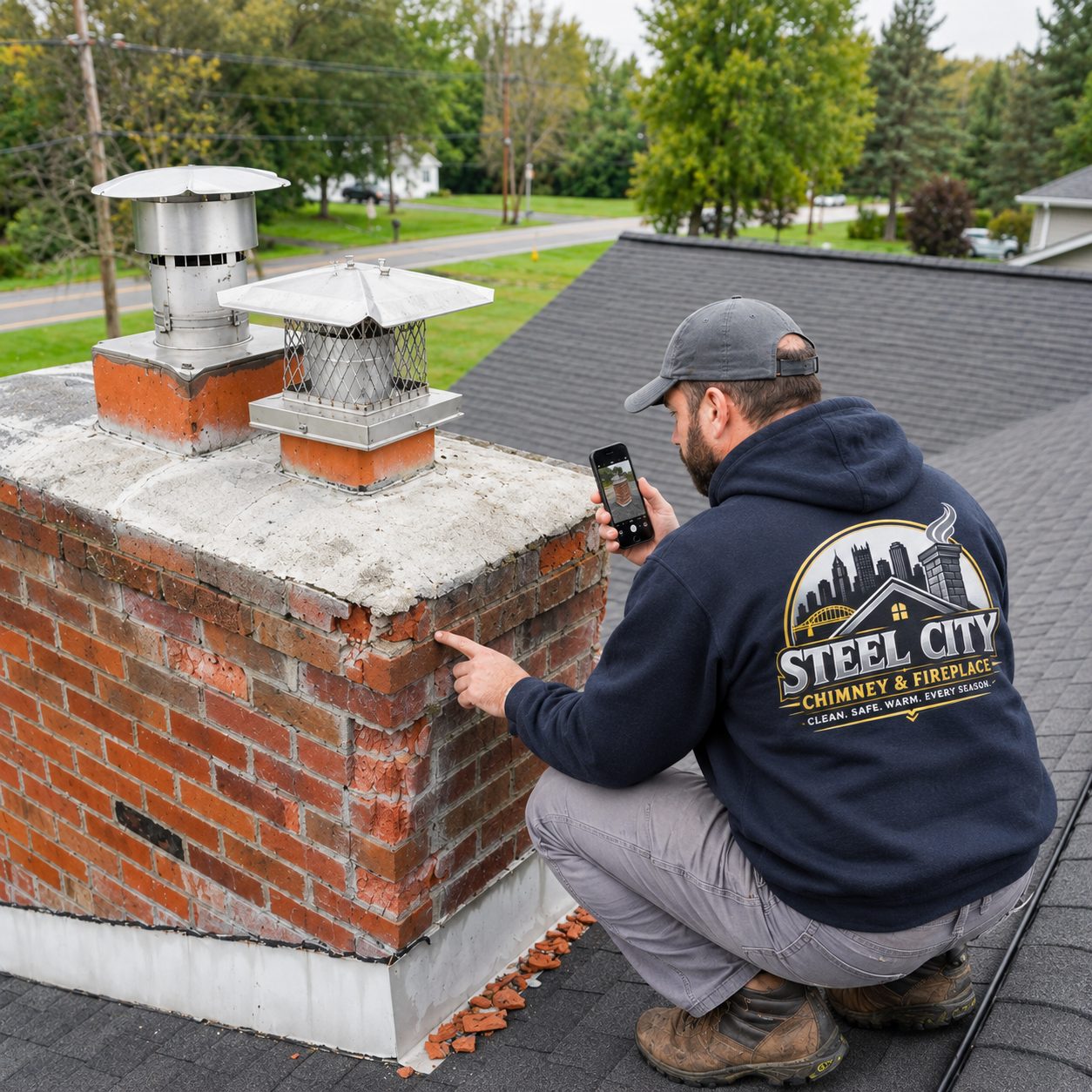
Inspection is a diagnostic look at the whole system: crown, cap, flashing, masonry, liner, smoke chamber, damper, and firebox. It documents condition and flags problems, but a routine inspection doesn't necessarily remove buildup from the flue unless cleaning is also performed.
When You May Need Both
Most annual maintenance visits combine the two: an inspection to establish condition, followed by cleaning if creosote levels warrant it. This is efficient because the technician is already examining the flue closely, and cleaning gives extra visual access to the liner along the way.
Why the Difference Matters in Older Homes
On an older chimney, a cleaning alone can leave real structural or liner issues completely unaddressed, since removing creosote doesn't fix a cracked crown or deteriorated mortar. Conversely, an inspection alone won't clear a flue that's actually blocked or heavily coated — it will just tell you that it needs to be.
Questions to Ask Before Scheduling
- When was the chimney last cleaned, and when was it last inspected — are those different dates?
- Has anything changed since the last visit — smell, smoke, sound, or visible damage?
- Is this a routine annual visit, or are you responding to a specific concern?
Ready to get your chimney checked out?
Request a free estimate online or give us a call — we'll get back to you quickly.